
Orvieto
A town on a block of tuff, with twelve hundred caves underneath.
Orvieto stands on top of a tuff cliff eighty metres high with vertical walls on every side: that is what made it impregnable and what gave it its shape, because the town ends where the rock ends. It was Etruscan, then a free commune, then a seat of popes fleeing Rome, who felt safe here.
The cathedral was begun in 1290 and its front, of gilded mosaic and carved relief, is one of the most worked Gothic facades in Italy. Inside, the chapel of San Brizio holds the Last Judgement frescoed by Luca Signorelli between 1499 and 1504, which Michelangelo saw before painting the Sistine Chapel.
The underground
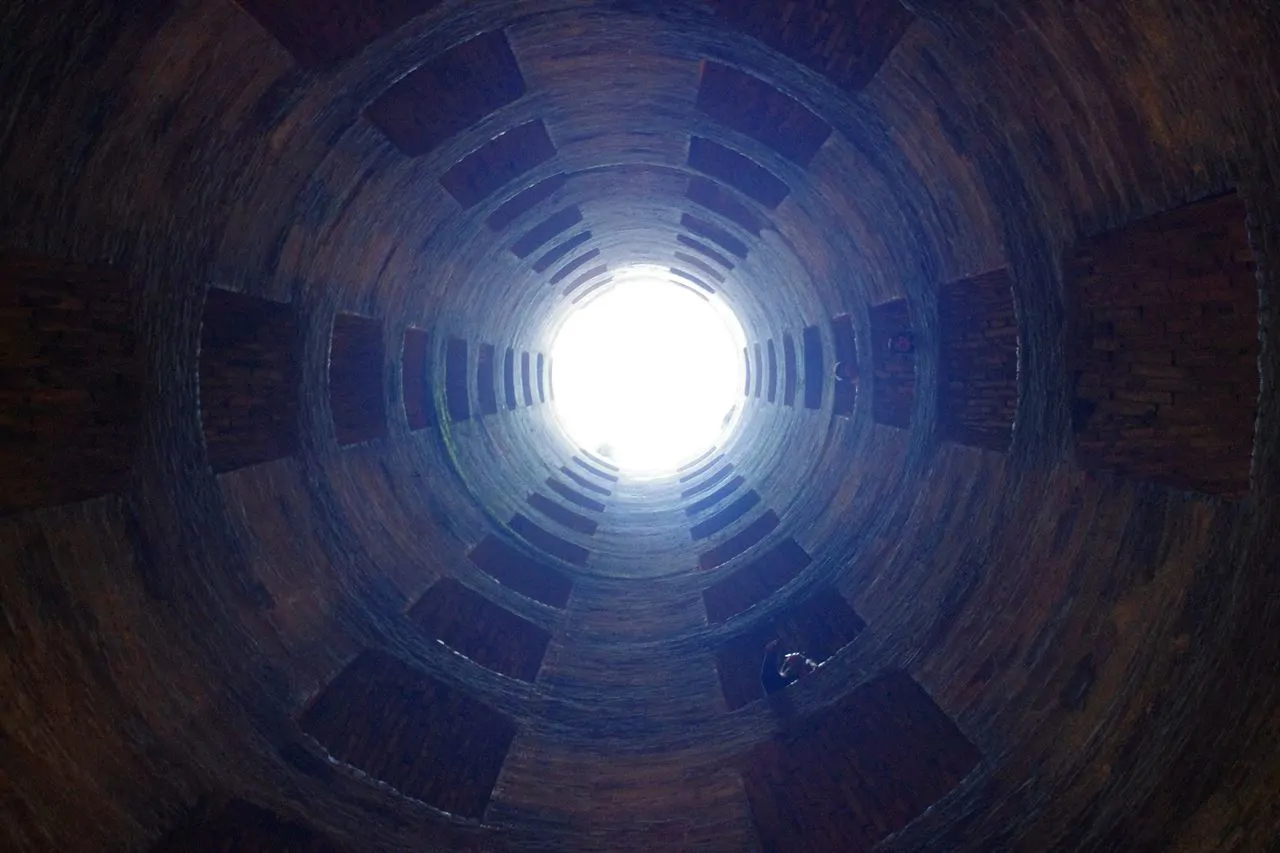
Tuff is easy to dig, and for two and a half thousand years the people living here dug: under the town there are about twelve hundred cavities among Etruscan wells, cisterns, cellars, dovecotes and oil mills. Part of it can be visited with a guide, and that is Orvieto Underground. The well of St Patrick, dug between 1527 and 1537 to guarantee water in case of siege, drops fifty four metres with two independent spiral staircases, so that whoever went up never met whoever came down: two hundred and forty eight steps each.
How to get there
The car is left below, at the station or the Campo della Fiera car park, and you go up by funicular or by lift: you do not drive into the centre. Orvieto has its own exit on the A1 and is on the Florence to Rome railway, so it is the Umbrian town easiest to reach without a detour.
From Trasimeno it is an hour's drive, from the Valle Umbra an hour and a half. Around it the white wine of Orvieto is made, and the local wineries receive visitors by appointment; twenty minutes away, already in Lazio, is Civita di Bagnoregio.