
Four days among hill towns that can see one another
From Trasimeno everything is less than an hour and a half away.
The advantage of Umbria is its scale: the distances are short, the roads are good and nowhere is more than an hour and a half from the lake. These four days leave the campsite in the morning and return in the evening, without moving the pitch.
Assisi and the Valle Umbra
Assisi takes half a day and it is worth arriving early: the basilica of St Francis has two churches one above the other and the frescoes of Giotto and Cimabue, and entry is free. In the afternoon you drop into the valley, where Spello has its Roman gates and flowered lanes, Bevagna a complete medieval square and Montefalco a terrace that looks over everything.
Perugia and Trasimeno
Perugia has its centre on top and you go up by the escalators that pass through the Rocca Paolina, a sixteenth century fortress built over an entire quarter, which stayed underneath and can be walked through. In the square are the Fontana Maggiore by the Pisano family and the National Gallery of Umbria. In the afternoon you go back to the lake and take the ferry to Isola Maggiore.
Spoleto, Todi and the Valnerina
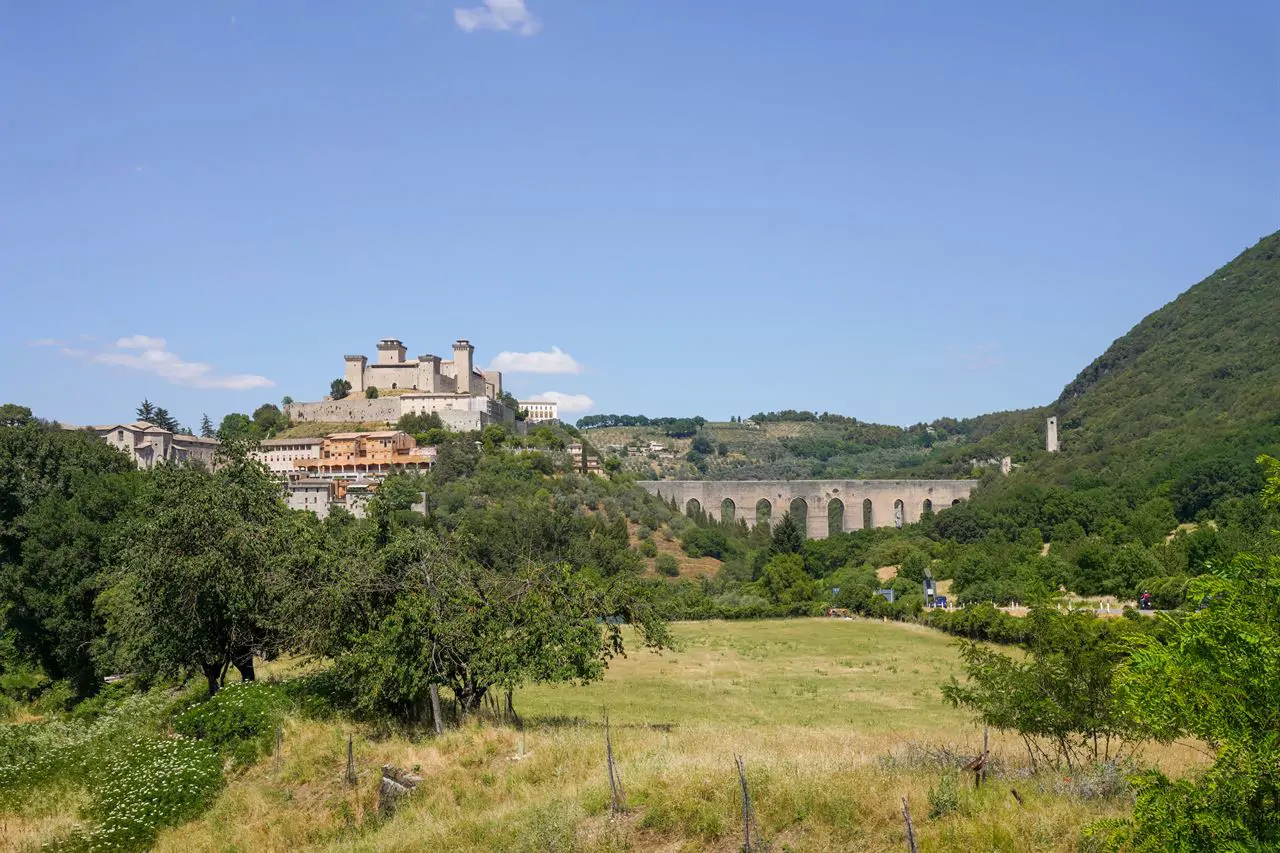
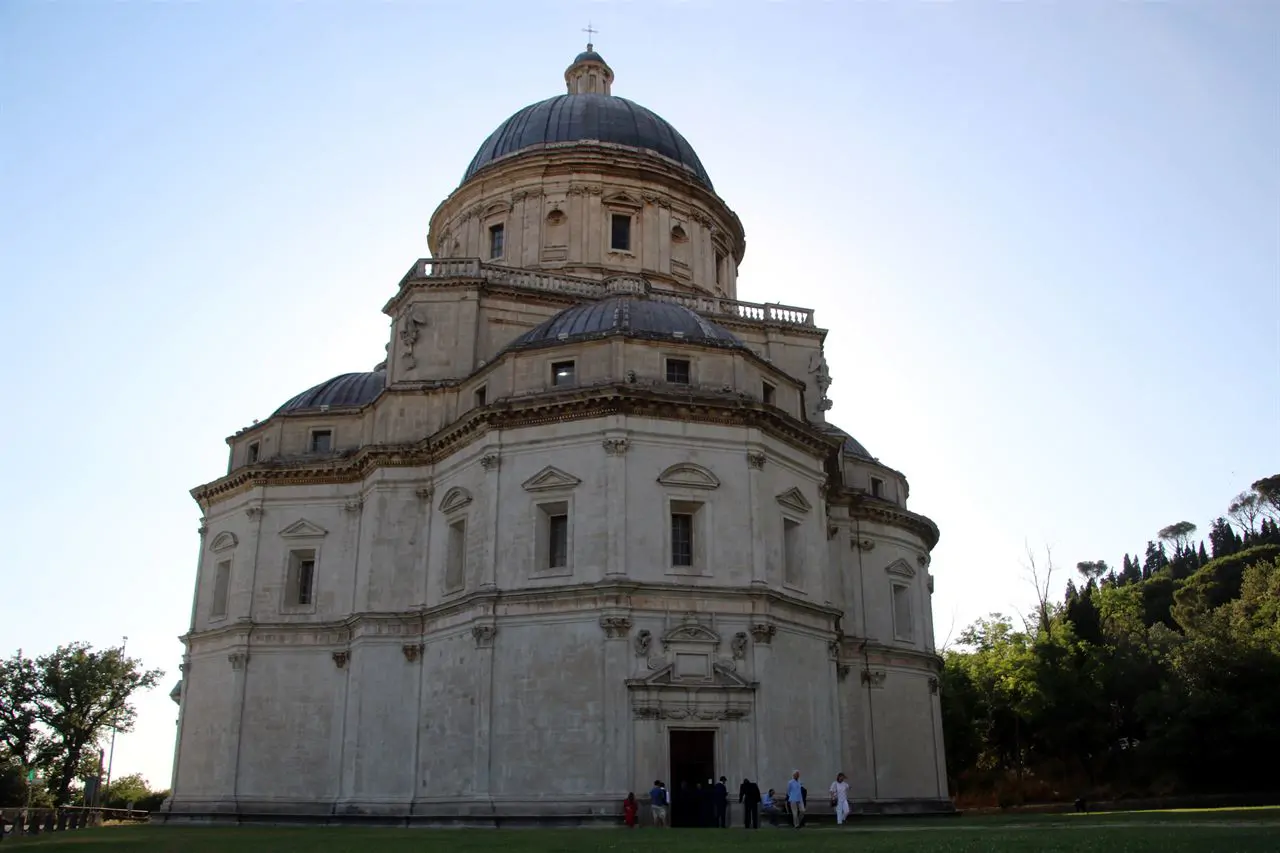
Spoleto has the Ponte delle Torri, a medieval aqueduct two hundred and thirty metres long and eighty high that you cross on foot, with the fortress above. Todi has the Piazza del Popolo and, outside the walls, Santa Maria della Consolazione. Anyone with another half day climbs into the Valnerina as far as the abbey of San Pietro in Valle and Ferentillo.
Orvieto and the south
Orvieto stands on a tuff cliff and is reached by funicular from the car park below. The cathedral has a mosaic front and inside the chapel of San Brizio, frescoed by Signorelli; the well of St Patrick drops fifty four metres with two spiral staircases that never meet. The same day out can include Civita di Bagnoregio and Lake Bolsena, which are already in Lazio.