
Running candles, flower carpets and a jazz festival
Medieval festivals taken seriously, and two seasons that changed their cities.
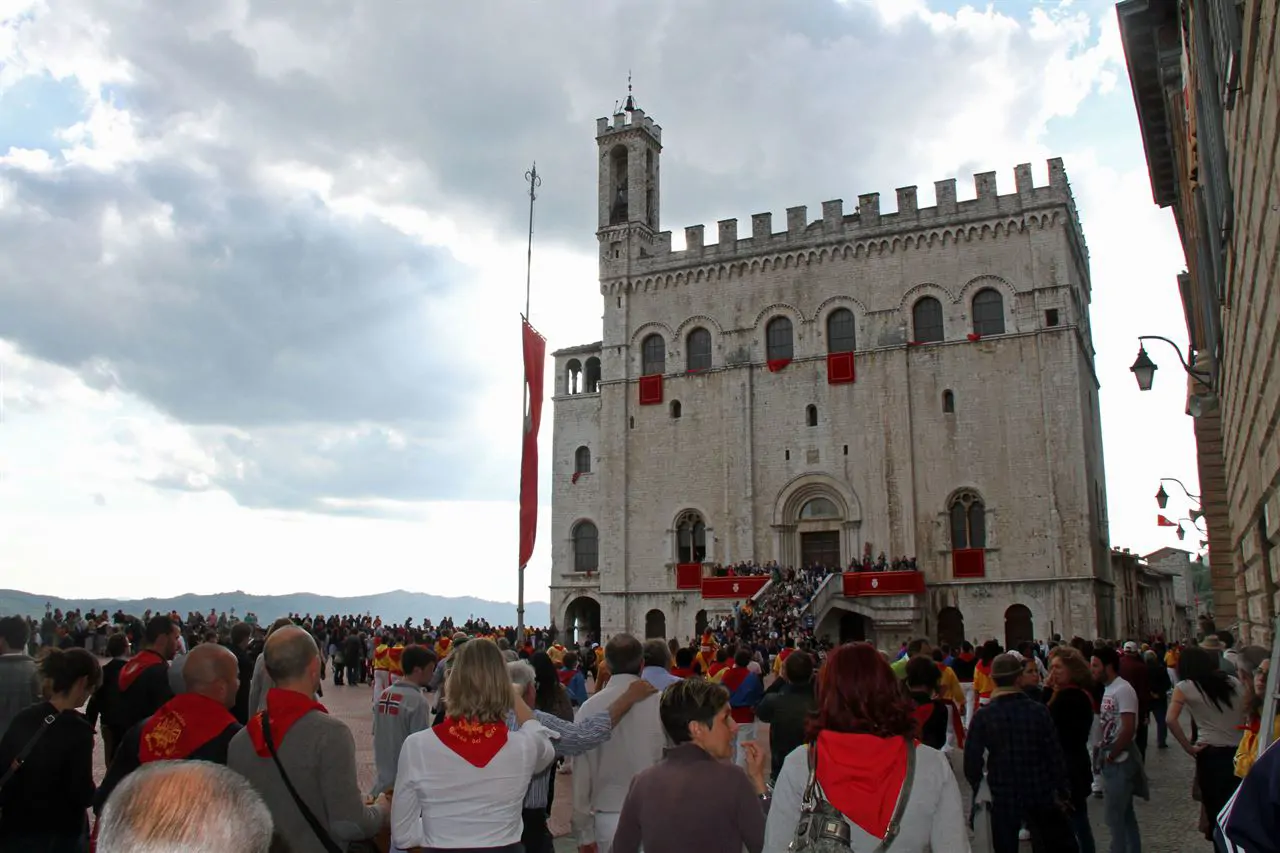
Two calendars live side by side in Umbria: that of the village festivals, which come from the Middle Ages and have never stopped, and that of the twentieth century festivals, which brought an international audience here and are now as much part of the landscape as the walls.
The Corsa dei Ceri
On 15 May in Gubbio they run the Festa dei Ceri: three wooden structures four metres tall, carrying the statues of Saint Ubaldo, Saint George and Saint Anthony, are carried at a run by teams of ceraioli up Monte Ingino, four hundred metres of climb. It is not a race, because the finishing order is always the same: it is a collective test of endurance, and it has been done for at least eight hundred years.
The flower carpets and the jousts
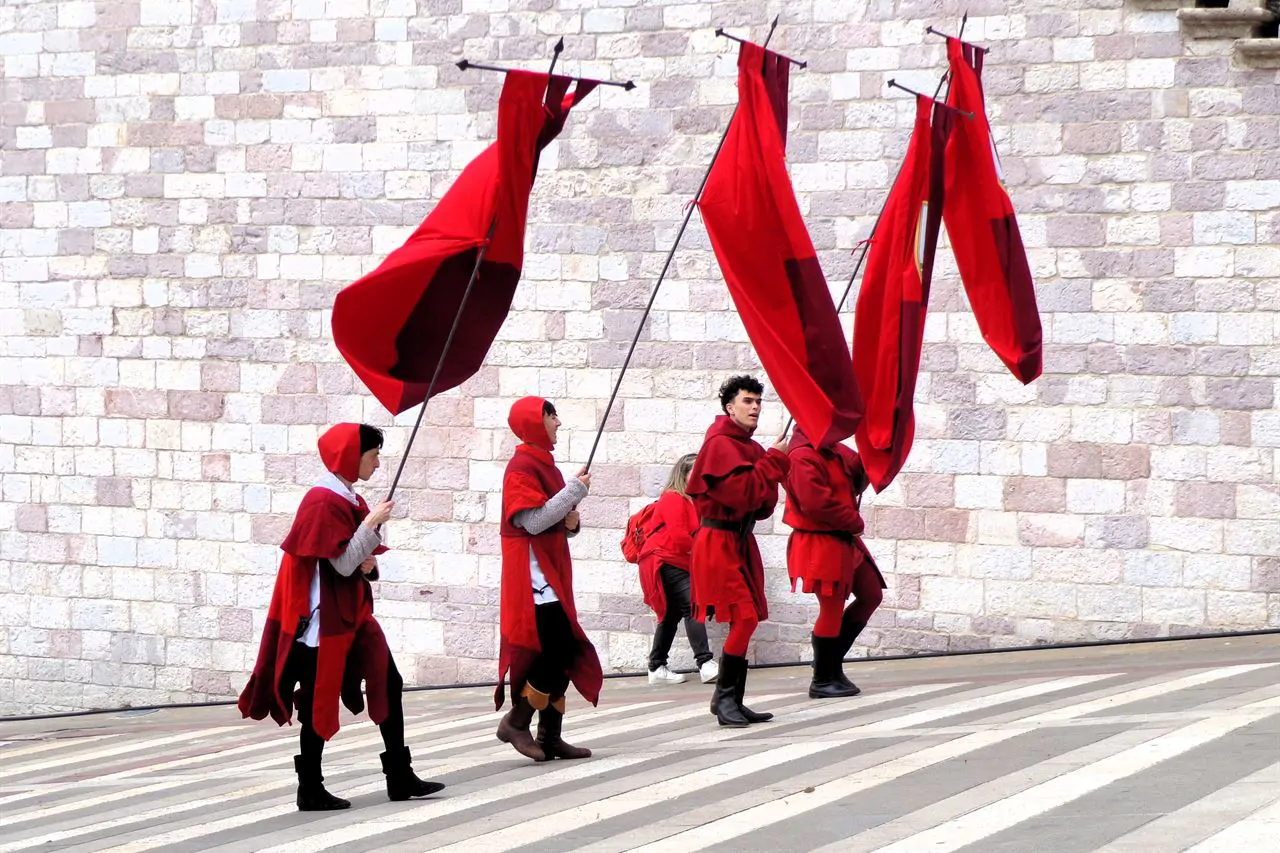
At Spello, for Corpus Christi, they spend the night composing carpets of flower petals hundreds of metres long through the streets of the centre, and in the morning the procession walks over them. At Foligno they run the Giostra della Quintana, a mounted tournament in seventeenth century costume, twice a year. At Assisi the Calendimaggio splits the town into two halves that compete in May.
The festivals
Umbria Jazz has been held in Perugia in July since 1973, and for ten days the city plays in its squares and theatres, with the main concerts at the Santa Giuliana arena. The Festival dei Due Mondi in Spoleto, founded in 1958 by Gian Carlo Menotti, brings opera, theatre and dance to a town of forty thousand people in June and July.
Autumn and winter
From October there are the truffle and chestnut fairs, the best known at Citta di Castello. In Perugia, in October, Eurochocolate fills the centre. In December a Christmas tree drawn in lights, seven hundred metres tall, is lit on the flank of Monte Ingino above Gubbio.