
The Marmore falls
A hundred and sixty-five metres in three drops, and the Romans made them.
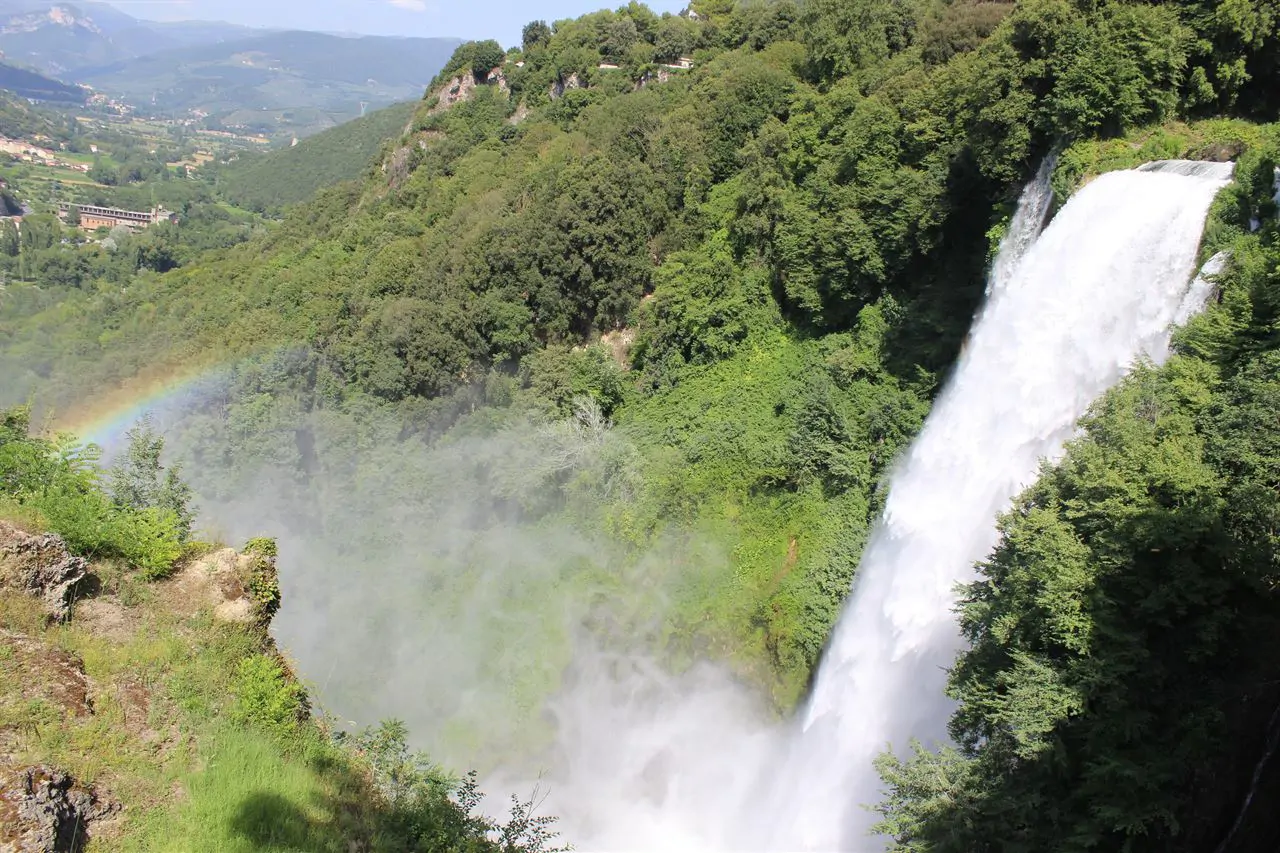
The Marmore falls are not natural. In 271 BC the consul Manius Curius Dentatus had a channel dug to drain the standing water of the Rieti plain into the river Nera, and the point where the Velino meets the edge of the valley became a drop of a hundred and sixty five metres in three steps. It has been remade several times since, because downstream it flooded Terni and upstream it waterlogged Rieti.
Since 1929 the water has also served the Galleto hydroelectric station, and that means the falls are not always on: the flow is released at set times, different by season, and when it starts it takes a couple of minutes to fill the drop. Check the times before setting off, because outside those windows what you see is a wet chute.
How to visit
There are two entrances, the lower viewpoint and the upper one, joined by paths with about seven hundred steps: you can go down from the top or up from the bottom, and either way you get wet, because the spray reaches everywhere. Path number two goes behind the first drop, inside a natural tunnel, and there a raincoat genuinely helps.
One ticket covers both viewpoints and is valid all day; in summer the falls also stay open in the evening under floodlights. The park is part of the Nera river park, and from there the rafting routes on the river and the climbing routes of the gorge set off.
Around
Five kilometres away is Lake Piediluco, shut in among the hills with the village on the water: boats can be hired and there is rowing, and there are more campsites here than in the rest of the province. Terni is seven kilometres away and worth a short stop, while the Valnerina climbs towards Ferentillo and the abbey of San Pietro in Valle, which is eighth century.